During his PhD at Curtin University, Seamus Anderson achieved a major milestone: the first recovery of a fallen meteorite using a drone and an AI based detection workflow ( Anderson et al, 2022, ApJL). Anderson developed the system end-to-end, combining high-resolution drone imaging with a convolutional neural network (a machine-learning model trained to recognise meteorites in aerial photos) and a robust field data pipeline capable of handling the large data volumes these tools produced. A key challenge was operating this system in a remote field environment with no internet connectivity or mains power, while managing hundreds of gigabytes of imagery each day.
For the Desert Fireball Network (DFN), a continent-scale camera network that tracks fireballs across Australia, this demonstration was a turning point. The DFN had been determining meteorite fall locations since 2014, but ground searches remained slow and resource-intensive. Drone-enabled recovery demonstrated clear gains in efficiency, while also highlighting the need for improved data handling, increased automation, and a scalable platform suitable for routine field operations.
Although drone-based recovery opened up new opportunities, scaling the approach beyond a single demonstration required more than hardware alone. The workflow still faced several bottlenecks, including data transfer from remote locations, processing throughput, manual candidate review, and coordination during field campaigns.
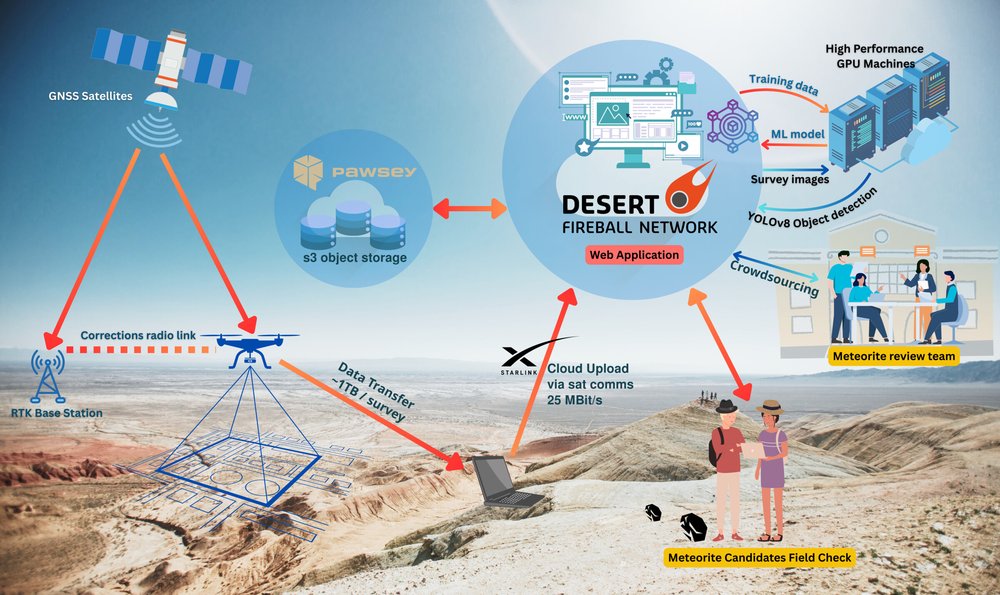
In 2023, an auditing and scoping phase was undertaken with ADACS to define the requirements for a more efficient and scalable system. This work led to the design of a new data processing platform that addressed the full workflow. A key architectural change was the use of satellite communications to move data processing off-site, enabling direct uploads from the field and access to cloud-based computing resources. This also enabled the introduction of crowdsourcing for human-intensive review stages, significantly reducing the workload on field teams.
The platform was developed throughout 2024 - 2025 using a closed-loop feedback process between the software developers and the science team, with multiple field tests informing successive iterations. The final system integrates technologies from several domains into a single real-time processing pipeline:
- Data-intensive drone surveying, producing up to 1.6 terabits of data per day, supported by RTK (Real-Time Kinematics) GPS corrections for precise positioning
- Real-time data upload from the field to the cloud using satellite communications
- Machine-learning-based meteorite detection, run on high-performance virtualised GPUs (Graphics Processing Units)
- Crowdsourcing tools, delivered through a secure and intuitive web interface that allows contributors worldwide to help prioritise promising meteorite candidates
- Automatically generated field maps, guiding operators to targets with metre-level accuracy
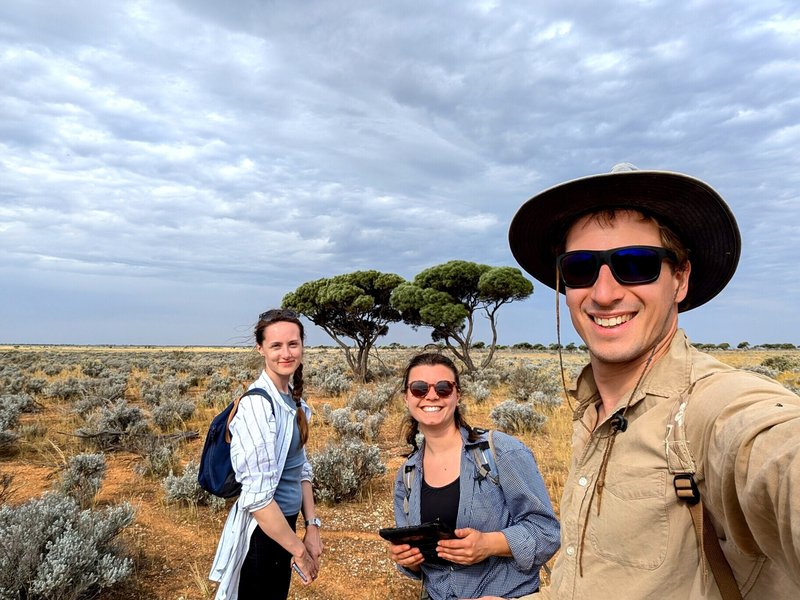
Picture 1: Veronika, Iona and Hadrien field testing the new app's beta version.
During a field validation campaign in May 2025, a 1.3 km² fall area was surveyed, producing 10,289 drone images (approximately 190 GB). Thirteen members of the research group participated in the crowdsourcing review, examining 26,610 potential candidates. A three-person field team followed up 803 candidates on site, guided by the platform’s GPS-linked maps. Although the target meteorite was not recovered, seven older meteorites were found, demonstrating the effectiveness of the system.
Based on these trials, the platform is estimated to be approximately eight times more efficient than traditional human ground searches. The workflow is faster, more scalable, and enables more focused and effective field recovery efforts.
In July 2025, the Desert Fireball Network observed a bright fireball over the Central Desert of Western Australia, designated DN250711_02. Updated trajectory modelling indicated a recoverable meteorite, prompting a field expedition in November. A team from Curtin University and the Desert Fireball Network conducted a systematic search using drones and a machine-learning detection pipeline to identify meteorite candidates in challenging desert terrain. Despite extreme conditions and many false positives, the meteorite was recovered on the final day of the search. The approximately 300 gram Dale meteorite became the eleventh meteorite with a known orbit recovered by the network and the third found using drone-assisted methods.
The platform is now live at find.gfo.rocks, and its underlying approach may also be applicable to other search-and-recovery problems, including wildlife search and rescue.
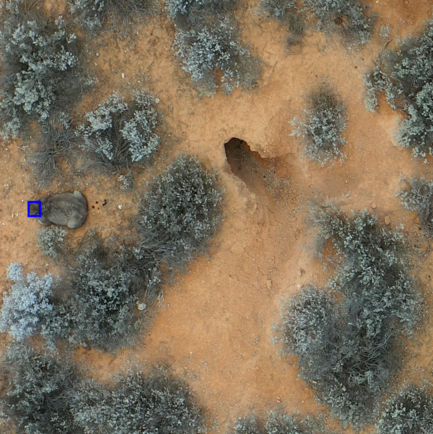
Picture 2: One of many wombats found by the platform.