Jay Smallwood successfully requested time from the ADACS MAP for us to develop and deliver a GPU training workshop. The workshop was delivered at Swinburne university and made use of the OzStar HPC cluster for access to GPUs. The workshop began with an introduction to general concepts of parallelism and then focused on data parallelism. The workshop built on the existing python proficiency of the astronomy community by first looking at optimisation and parallelisation of CPU code using Numpy and Numba. After an introduction to the logical and physical operation of a GPU, the workshop then introduced CuPy to enable learners to write GPU code entirely in python, but which would then be compiled and moved to the GPU for execution.
The local organising committee put in a terrific job of organising the teaching space as well as inviting and communicating with participants (over 60!).
The workshop was not for the faint-hearted, with a large amount of material being covered in the two days, but the feedback from learners showed that it was well worth the effort.
The workshop materials can be found at the github pages site, and has been designed to accommodate people working on their own system at their own pace.
If you would like to see this workshop re-run or adapted for your group please get in contact.
Check out some of our other training projects.
The NextFlow training provided comprehensive instruction on workflow orchestration, including running and developing NextFlow workflows, using containers (docker and singularity), configuring NextFlow with SLURM, and covering best practices.
Three days of talks, panel discussions and workshops focused on Green Computing (resource use minimisation through automation and optimisation).
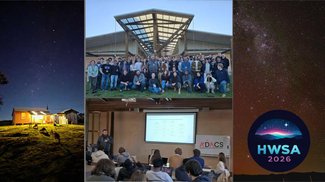
ADACS delivered Version Control training for both beginners and advanced users at the HWSA (Harley Wood School of Astronomy) in 2021.